Festival, Ceremony or Public Holiday: What Sets Them Apart?
Festival, ceremony or public holiday: learn how purpose, participation and calendar shape each observance, and why a single occasion can belong to all three.
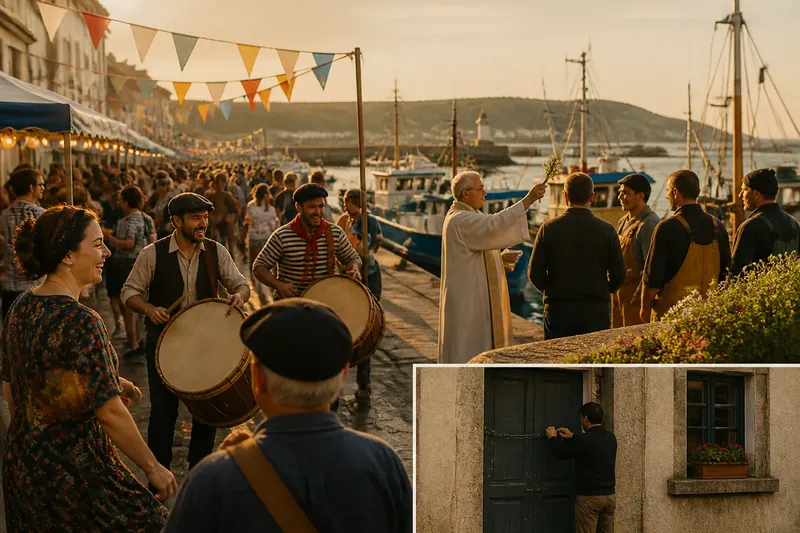
A town square fills with food stalls and drumming, while a nearby hall hosts a quiet rite and the council offices close for the day. The festival, ceremony and public holiday may share a date, but they answer different questions: what is being done, how people take part, and how the community marks time. To distinguish them, look first at the purpose of an observance, then at its form and place in the calendar.
Purpose separates the observance from its outward form
A festival is generally an occasion organised around shared celebration or cultural expression. Music, dance, food, processions, craft and play may all belong to it. A festival can honour a harvest, a religious figure, a neighbourhood, an art form or a seasonal change. Its defining quality is not a particular activity but the way a programme gathers people around an occasion.
A ceremony is a recognised sequence of actions that gives weight to a transition, promise, memory or shared value. It might involve words, gestures, dress, objects or a designated place. A ceremony can be joyful, solemn or both. Its actions are usually more prescribed than the activities at a festival, because their order and meaning matter to those taking part.
A public holiday is primarily a calendrical and civic designation: a day set aside for public observance, rest or both. Its status is not defined by one particular ritual or entertainment. A holiday may be marked with formal events, family customs, public gatherings or no organised activity at all. The calendar designation is what distinguishes it from a festival or ceremony.
These categories therefore describe different dimensions. “Festival” points towards a kind of gathering; “ceremony” points towards a kind of meaningful action; “public holiday” points towards a recognised place in the shared calendar. They are not rival names for the same thing.
Participation can be open, bounded or simply permitted
Festivals often invite a broad public to attend, even when they grow from the customs of a particular community. Visitors may watch a performance, join a dance, buy food or simply spend time in the space. Organisers can make participation active or largely observational. The invitation does not mean every part of the event is open to everyone: some activities may be reserved for members, performers or people with a particular role.
Ceremonies tend to distinguish between those who perform an action and those who witness it. A naming rite, for instance, may give close relatives a defined role while neighbours attend as guests. In other settings, participation may require membership, preparation or an invitation. The presence of an audience does not turn a ceremony into a performance; witnessing can itself be part of how a community recognises the occasion.
A public holiday can leave participation entirely to individuals and families. People might gather for a parade, follow a religious observance, visit relatives or use the day for ordinary recreation. A day off does not prescribe a single form of belonging. Some residents may regard the holiday as central to their identity, while others experience it as an administrative change to the week.
When deciding what an observance is, ask not only who is welcome but what participation means. Buying a ticket, carrying a banner, speaking a set phrase and taking a day away from work are different forms of involvement. Their significance depends on who organises the occasion and how participants understand their roles.
The calendar gives an observance a public rhythm
Calendars make communal time visible. A festival may recur with a season, a market cycle, a religious calendar or a local anniversary. Its date can be fixed, movable or linked to conditions such as the arrival of a crop. What matters is the recognised return: people anticipate the occasion, prepare for it and often interpret the present through memories of earlier gatherings.
A ceremony may be recurring, but it can also happen once in response to a life event or a particular need. Some ceremonies mark a transition at a point chosen by a family or institution rather than on a date shared by the whole community. Others recur at an appointed time and help renew a relationship between participants and a place, belief or collective memory.
Public holidays have a more explicit relationship to a public calendar. Governments or other recognised authorities designate them, and that status can affect public services, schools, workplaces and transport. The precise arrangements differ between places. A holiday can also carry several meanings at once: a civic commemoration for one person, a family day for another, and an ordinary date in a different community’s calendar.
Calendar placement can connect the categories without erasing their distinctions. A festival held on a public holiday remains a festival because of its celebratory programme; the date has holiday status for a separate reason. A ceremony may be the central event of a holiday, while the holiday itself encompasses a wider set of public and private observances.
One occasion can hold all three meanings
Imagine a coastal town that marks the opening of its fishing season. The council designates a public holiday, local groups organise a day of music and food, and crews take part in a formal blessing before boats leave the harbour. The holiday gives the date civic standing, the festival creates a broad gathering, and the ceremony marks a meaningful transition for those involved. None of the labels cancels the others.
The same distinction helps with occasions that change over time. A gathering may begin as a religious ceremony, draw a wider public and acquire a programme of performances. A public authority might later recognise its date as a holiday. The observance then carries layers of purpose and organisation, and different participants may emphasise different layers.
It is also possible for a public holiday to have little visible ceremony or festival activity. Offices may close and families may take the day off without a public programme. Conversely, a lively festival can take place on an ordinary working day. The size of a crowd, the presence of costumes or the use of a stage does not, by itself, settle the classification.
What is not worth the effort is trying to force every complex occasion into a single exclusive box. A more useful description names the relevant features: who recognises the date, what actions give it meaning, and which parts of the public can take part. That keeps the account clear without flattening local differences.
Questions that clarify the difference?
Can a festival be a public holiday?
Yes. A festival can be held on a day that is also designated as a public holiday. The festival describes the organised gathering, while the holiday describes the date’s public status.
Is a ceremony always religious?
No. Ceremonies can be civic, educational, familial or connected to many other forms of shared life. What makes an action ceremonial is its recognised sequence and significance to the people involved, not necessarily a religious setting.
Does a public holiday need a public event?
No. Its standing as a holiday comes from its place in the public calendar, not from a parade or formal gathering. People may observe it privately, or may treat it chiefly as a day away from usual obligations.
How should I describe an occasion with overlapping forms?
Name the forms that are actually present and explain what each contributes. For instance, an occasion might be a public holiday featuring a festival whose opening includes a ceremony.
Choose the label that answers the question
When describing a local observance, begin with the detail your reader needs. If the question is what people do together, “festival” may be the clearest word. If the focus is a sequence of actions marking a change or reaffirming a value, “ceremony” is more exact. If the point is why a date alters the public calendar, call it a public holiday.
Then add the context that prevents misunderstanding: who organises it, who takes part, whether attendance is open, and how the date is recognised. Local names may not map neatly onto these general terms, so retaining the name used by participants can be more respectful and precise than replacing it with a broad category.
The distinction is useful because it makes room for both shared structure and local meaning. Festival, ceremony or public holiday: each term identifies a different way an observance belongs to communal life. A careful description can hold those meanings together, while leaving the people who practise the tradition room to explain what matters most.